The key to a successful team often lies in the quality of communication between managers and employees. 1-on-1 meeting sessions have emerged as a powerful tool to foster this communication, leading to higher employee engagement, increased productivity, and improved business outcomes. Effective 1:1 meetings are a key driver of team productivity, morale, and engagement, making them essential for organizational success. But how can you harness the power of these 1 on 1 meeting opportunities to benefit both managers and employees? Setting aside dedicated time for these meetings ensures they are intentional, productive, and free from interruptions. In this blog post, we’ll explore the ins and outs of 1-on-1 meeting strategies, from their purpose and importance to effective planning strategies, templates, and tips for successful conversations.
Key takeaways
- 1:1 meetings strengthen trust and engagement, which leads to higher morale and better overall team performance
- Regular, structured check-ins create space for honest feedback, alignment on goals, and continuous personal and professional growth
- The most effective conversations prioritize active listening, open communication, and building genuine rapport between manager and employee
- Using clear agendas, consistent cadence, and note-taking ensures meetings stay focused, productive, and lead to actionable outcomes
- When done well, 1:1s create value at every level by developing employees, improving leadership effectiveness, and driving stronger business results
What Are 1:1 Meetings?

One-on-one meetings (1:1s) are a valuable tool for managing teams, involving regular conversations between managers and employees. These sessions provide an opportunity to review progress, address concerns, and improve job satisfaction. By focusing on key topics and strengthening the working relationship, they can significantly boost engagement and collaboration.
These conversations are also essential for building trust, encouraging open communication, and supporting effective management.
In fact, the 90:10 rule suggests that managers should aim to listen 90% of the time and speak only 10% during these meetings to ensure effective communication. These meetings serve multiple purposes, such as coaching, performance reviews, and regular check-ins, helping to foster communication, trust, and goal alignment between managers and team members.
For a 1:1 culture to be successful, buy-in from the entire organization is essential.
Definition and purpose
One-on-one meetings are regular check-ins between a manager and an employee to discuss work progress, personal growth, and any relevant matters. Their purpose is to understand how the employee has been feeling in recent weeks, explore career interests across the organization, and gather perspectives on team changes or restructuring. Common topics include goals, feedback, recognition, current projects, and the clarification of expectations around performance, priorities, and career development.
By building a trusting and productive relationship, these meetings can increase job satisfaction, support personal development, and improve overall well-being. They help employees set and track development goals while encouraging ownership of their growth, with managers providing guidance and support. These sessions also create space for constructive feedback, recognition, and problem-solving. According to Gallup, employees who receive weekly feedback from managers are significantly more motivated than those who receive feedback only annually.
Benefits of 1:1 Meetings

One-on-one meetings offer valuable benefits across an organization. For employees, they provide feedback, support, and opportunities for growth. Managers use them to guide development, address challenges, and improve their leadership through direct feedback.
At a broader level, regular 1:1s boost engagement, productivity, and overall business performance while strengthening company culture. They support performance management, professional development, and employee engagement, making them a versatile tool for both individual and organizational success.
Employee Benefits
One-on-one meetings provide employees with valuable feedback, support, and opportunities for personal and professional growth. By discussing career goals during these meetings, managers can gain insight into an individual’s ambitions and interests, both in and beyond their current role. Open communication during 1:1 meetings is crucial, as it enables employees to effectively convey their experiences, objectives, ideas, and obstacles while giving their manager the necessary information to provide support. These meetings also offer a platform to discuss professional development opportunities, which are essential for ongoing employee growth and improved performance management. Recognizing small wins during one-on-one meetings can further boost motivation, track progress, and foster employee engagement.
Collaborating with managers through proactive preparation and active participation in one-on-one meetings can facilitate productive discussions that lead to:
- Meaningful career development
- Enhanced job satisfaction
- Increased employee engagement
- Higher motivation
- Stronger commitment to work and the organization
Manager Benefits
Managers can utilize one-on-one meetings to direct team growth, tackle problems, and gain feedback to enhance their management abilities. These meetings also help managers refine their management style by adapting their approach based on individual team member feedback. Finding the right balance between providing support and allowing autonomy during one-on-one meetings is crucial for effective management. Additionally, one-on-one meetings provide an opportunity for managers to develop their interpersonal skills, which are essential for effective communication and relationship-building. By inquiring about team members’ needs and gaining insight into their managerial expectations, managers can continuously improve their performance and better support their direct reports. Weekly feedback, as opposed to annual feedback, has been shown to result in more motivated and engaged team members.
The impact of poor management has been measurable for years. As early as Gallup’s State of the Workplace 2021 Report, data revealed that a 20% pay raise is necessary to motivate most employees to switch away from a manager who engages them. Surprisingly, almost no incentive is needed for most disengaged workers to change companies. This emphasizes the importance of effective one-on-one meetings in fostering employee engagement and retention.
Business Impact
Regular one-on-one meetings can lead to significant benefits for the business, such as heightened employee engagement, improved productivity, and enhanced business results. These meetings also positively influence team dynamics by improving communication and collaboration, which fosters a more cohesive and productive team environment. Google’s Project Oxygen research indicates that managers who have 1:1 meetings with their reports show higher performance ratings. Those who do not have such meetings tend to receive lower ratings.
Replacing annual reviews with regular one-on-one meetings creates a continuous feedback loop, enabling faster communication and boosting motivation and engagement. These sessions also help employees understand the company's direction and how their work contributes to it.
Capturing key takeaways from each meeting ensures better follow-up and more effective future discussions, ultimately supporting a stronger, more successful organization.
Planning and Conducting Effective 1:1 Meetings

Effective 1:1 meetings require thoughtful planning and consistent execution to build strong relationships, encourage open communication, and ensure important topics are addressed. Key elements include setting the right frequency and duration, choosing an appropriate meeting setting, preparing a clear agenda, and capturing notes for follow-up. Using a shared, running agenda document can also help both participants stay aligned and contribute to topics over time.
Frequency and duration: Most teams benefit from weekly or bi-weekly meetings lasting 30–60 minutes. Regular cadence helps maintain alignment, address issues early, and prevent communication gaps, while also giving space to batch topics instead of reacting to every issue in separate meetings.
Meeting location: Choose a comfortable, quiet environment, either in person or virtual, that supports focused, open conversation. The right setting reduces distractions and helps build trust and rapport between manager and employee.
Agenda: A clear agenda keeps the meeting productive and intentional. It should include priorities, goals, key discussion points, and space for check-ins or feedback. Rather than focusing only on status updates, 1:1s should prioritize development, challenges, and meaningful dialogue. A shared agenda document allows ongoing collaboration and better organization.
Notes and follow-up: Taking notes during the meeting helps capture key insights, decisions, and action items. This ensures accountability, supports progress tracking, and provides useful context for future discussions.
By focusing on these core practices, organizations can make 1:1 meetings more structured, collaborative, and impactful for both managers and employees.
Templates for Different Types of 1:1 Meetings

Various one-on-one meeting templates can be used depending on the goal, such as regular check-ins, goal-setting sessions, performance reviews, and first meetings with new team members.
A strong template typically includes sections for goals, action items, feedback, challenges, upcoming work, and open discussion to keep conversations focused and productive. These templates help ensure important topics are covered and support more effective, personalized discussions compared to broader team meetings.
Regular Check-in Template
A regular check-in template is designed for routine check-ins between managers and their direct reports to discuss progress, challenges, and goals. This type of template can help keep meetings focused and organized while ensuring that all pertinent topics are addressed. By regularly evaluating progress and addressing any difficulties, managers can provide guidance and support to their direct reports, fostering a positive working relationship and contributing to overall team success.
New Team Member Template
The new team member template is designed for the first one-on-one meeting to establish trust and set expectations. During this initial conversation, managers should welcome the new hire, understand their preferences, and support their process, including effective onboarding for remote employees. Building rapport early helps encourage open communication and engagement. Questions may cover remote work experience, communication preferences, and short- and long-term career goals.
By using a new team member template, managers can:
- Create a positive foundation for their relationship with the new employee
- Ensure that the new employee feels supported and engaged from the very beginning
- Set the stage for a successful working relationship
- Contribute to overall team cohesion and performance.
Goal-setting Template
The goal-setting template is designed to focus on setting and reviewing individual and team objectives during one-on-one meetings. While there is no specific or standard goal-setting template for 1:1 meetings, it may vary depending on the company and the manager’s preferences. This template intends to facilitate the setting and review of individual and team objectives in a focused and organized manner. For example, the template can be used to track progress on a specific project, ensuring that particular objectives within the broader goal-setting framework are regularly reviewed and updated.
By using a goal-setting template during 1:1 meetings, managers and employees can ensure that they are aligned on key priorities and expectations, fostering a more productive and successful working relationship.
Performance Review Template
The performance review template provides a structured framework for discussing evaluations, feedback, and areas for improvement during one-on-one meetings. While the agenda and specific talking points may vary depending on the company and manager’s preferences, having a clear structure and defined topics is essential for a productive discussion.
By utilizing a performance review template during 1:1 meetings, managers can provide constructive feedback, recognize employee achievements, and identify areas for improvement in a structured and clear manner. This not only contributes to an employee's personal and professional growth but also enhances overall team performance.
Elevate 1:1 Meetings with Kumospace
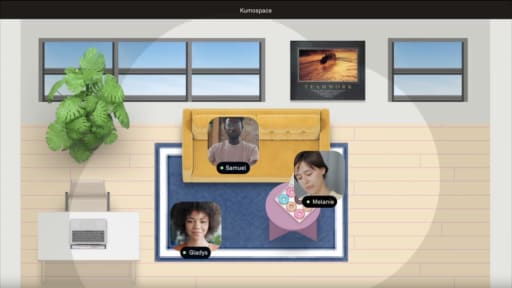
Kumospace transforms traditional 1:1 meetings into more engaging, productive, and human conversations by recreating the feeling of being in the same room even when teams are remote. With built-in video conferencing, spatial audio, and a virtual office environment, managers and employees can move beyond rigid calendar calls and create more natural, comfortable interactions that encourage openness and trust.
Instead of jumping between disconnected tools, Kumospace centralizes communication so teams can quickly connect for scheduled 1:1s or spontaneous check-ins, improving consistency and follow-through. Its immersive environment helps reduce meeting fatigue, increases participation, and makes conversations feel more personal, which is critical for honest feedback and stronger relationships.
For organizations focused on performance, Kumospace also improves visibility and alignment by making it easier to stay connected throughout the week, not just during formal meetings. The result is more meaningful 1:1 conversations, stronger engagement, and better outcomes for both employees and managers.
Tips for Successful 1:1 Conversations

To make one-on-one meetings open, honest, and productive, both managers and employees should focus on clear communication, mutual respect, and consistent engagement. These strategies help address concerns, share ideas, and strengthen working relationships.
Create approachability
Approachable managers create a safe space where employees feel comfortable speaking up. This is especially important in remote and hybrid settings, where tools like Kumospace can help recreate informal interactions and make communication more natural and accessible.
Active Listening
Active listening means fully focusing on the speaker, asking clarifying questions, and reflecting key points. This helps managers better understand their team and build stronger, more supportive relationships.
Open Communication
Encouraging transparency and honesty allows both parties to discuss challenges, share feedback, and resolve issues early. Being open to feedback and willing to adapt strengthens trust and collaboration.
Building Rapport
Strong relationships are built through empathy, genuine interest, and regular connection. Taking time to understand employees’ goals and experiences fosters trust, improves communication, and leads to more effective 1:1 meetings.
Summary
One-on-one meetings are a critical tool for fostering open communication, strengthening working relationships, and improving overall team performance. When approached with clear intent, thoughtful planning, and the right structure, these meetings create a consistent space for feedback, alignment, and meaningful professional development.
Their effectiveness depends on key practices such as active listening, honest and open dialogue, and building genuine rapport between managers and employees. These elements help create trust, surface challenges early, and support continuous growth on both sides.
By consistently applying these strategies and tailoring meetings to different goals and scenarios, organizations can create a more engaged, motivated, and high-performing work environment where individuals feel supported and empowered to succeed.
Frequently Asked Questions
A 1-on-1 meeting is an essential tool for any successful relationship between manager and employee. It is a private, agenda-driven conversation that provides an opportunity to offer feedback, discuss objectives, and foster professional development on both sides.
This dedicated time can help ensure ongoing success in any workplace.
A 1-on-1 meeting should be an opportunity for both parties to openly communicate in order to address concerns, discuss progress, provide guidance and support, as well as build a trusting relationship. When structured properly, 1-on-1s can be highly effective for both the manager and the employee.
Following the 12 ways of making a 1-on-1 meeting more effective is key for creating a productive and meaningful exchange.
A successful 1-on-1 meeting involves an agenda set in advance, collaboration between the manager and direct report, and a constructive discussion about goals, feedback, recognition, and career aspirations.
Through open dialogue, this allows for a productive and meaningful exchange of ideas to help reach shared goals.
A one-on-one meeting is an important way for a manager and employee to stay connected and build trust. This type of meeting should be structured, have a clear agenda, and include topics such as progress updates, goal setting, feedback, and concerns.
Regular 1:1s are essential for creating a productive and healthy workplace.
Preparing for a one-on-one with your boss is essential for success. Before the meeting, you should review goals and objectives, consider areas of improvement, and bring up any questions or concerns you may have.
To ensure a productive conversation, come prepared with ideas and be ready to discuss any objectives that need further action. With adequate preparation, you can make the most of your one-on-one time with your manager.