Illustration of a vibrant café scene with people chatting, sipping coffee, and using devices—symbolizing the informal yet powerful role of coffee meetings in networking and building professional relationships.

Coffee Meetings: How to Network & Build Relationships Over Coffee

By Sammi Cox

Coffee meetings remain one of the most effective, low-pressure networking tools in 2026, cutting through the noise of LinkedIn messages and cold emails with a simple 20-minute chat.

The key is relationship-building, not pitching or asking for favors, and approaching these meetings with curiosity rather than an agenda full of asks. A transactional coffee chat might focus on getting a referral, while a relational one shows genuine interest, like asking how someone applied a concept in their work. These meetings can happen in person at a local coffee shop or virtually using tools like Kumospace, with the same principles applying to both formats.

This article covers how to find people worth meeting, request coffee meetings naturally, run the conversation, follow up, and use digital spaces to scale this habit.

Key Takeaways

  • Approach coffee meetings with a relational mindset by researching your contact, preparing thoughtful questions, and listening more than you talk to make them feel heard.
  • Follow up within 24 hours and nurture the relationship over months, not days.
  • Use Kumospace to scale coffee meetings across remote teams and global networks.

What Makes Coffee Meetings So Powerful?

The coffee break has deep roots in workplace culture. As far back as the late 1890s in Wisconsin, workers negotiated short pauses during labor-intensive shifts, moments to recharge with hot coffee that boosted morale and productivity. That same principle applies to modern networking, where brief, informal intervals create space for authentic connection.

A 20–30 minute coffee meeting lowers the pressure compared to a formal interview or sales call. There’s no conference room, no slide deck, no one watching from behind glass, which encourages honesty and openness in ways a scheduled business meeting cannot.

The sweet spot is informal but professional. You might wear jeans and order a latte, but you still have clear goals and respect for the other person’s time, which makes coffee meetings effective for building trust.

Here’s how different professionals use coffee meetings:

  • Founder meeting investor: Gauging chemistry before a formal pitch
  • Job seeker meeting hiring manager: Learning about company culture without the interview pressure
  • Consultant meeting potential client: Understanding pain points before proposing solutions
  • Employee meeting cross-functional colleague: Building internal relationships that open doors later

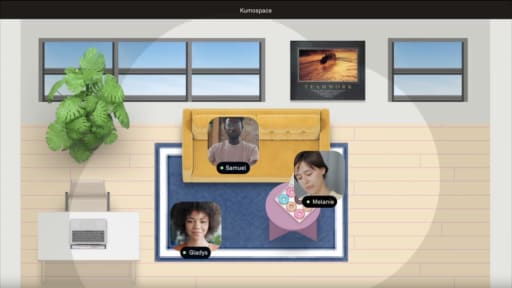
Virtual coffee meetings on Kumospace recreate this casual feel with customizable rooms, such as virtual café layouts with ambient coffee shop vibes, allowing a product manager in London to grab coffee with a mentor in San Francisco without either party booking a flight.

Setting Your Intentions: Relationships, Not Transactions

Before you schedule your next coffee chat, adopt a 12–18 month horizon for value. Stop asking, “What can I get in 30 minutes?” and start asking, “Who can I learn from and potentially help over the next year?”

People can sense when they’re being used for introductions, mentorship, or a sale, which erodes trust quickly in tight-knit industries.

Bad intention examples:

  • Asking for a job referral on the first meeting
  • Requesting a long list of introductions before you’ve offered anything
  • Pivoting the conversation to your pitch within five minutes

Good intention examples:

  • Learning about their career trajectory and the decisions that shaped it
  • Sharing an article, tool, or connection that might genuinely help them
  • Asking thoughtful questions about challenges they’ve faced

A simple internal script to carry into every coffee meeting is, “My goal is to understand this person’s story and look for one small way to be useful.”

This mindset works equally well at a local café, a corporate cafeteria, or in a Kumospace coffee room with remote colleagues. The setting changes; the intention stays constant.

Finding the Right People to Meet Over Coffee

Be strategic about who you’re reaching out to and focus on people whose experiences, industries, or roles you genuinely want to learn about, not just anyone with an impressive title.

Specific sources for coffee meeting targets:

  • LinkedIn searches: Filter by role, city, and company to find relevant professionals
  • Alumni directories: Your university network is often more responsive than cold outreach
  • Conference attendee lists: People who attend the same events share similar interests
  • Local meetup speakers: Presenters are often open to follow-up conversations
  • Online communities: Slack groups, Discord servers, and industry forums surface engaged professionals

Concrete example: A product manager in New York identifies 5–10 senior PMs at companies like Spotify, Etsy, or Stripe, reads their LinkedIn posts, notes any articles or talks they’ve done, and crafts personalized outreach to each.

Remote teams and freelancers can connect with people globally and host virtual coffee meetings in Kumospace, removing travel constraints entirely and expanding their network beyond geographic limits.

How to Ask Someone for a Coffee Meeting (With Templates)

The way you ask matters. A clear, respectful, and personalized message dramatically increases your response rate. Avoid long-winded emails or generic copy-paste templates that feel like mass outreach.

Reference one specific detail, such as an article they wrote, a talk they gave, a project they shipped, or a LinkedIn post that resonated, to show you did your homework and aren’t sending requests to everyone with “Senior” in their title.

Offer time flexibility, for example, “any weekday between 8:30–10:00 a.m. PST,” and make it easy to say no gracefully. Not everyone will respond, and that is fine. Send a single polite follow-up one week later, then move on, remembering that rejection is part of the process.

Email Template: In-Person Coffee Ask

Subject: Quick coffee near South Station? (15–20 min)

Hi Sarah,

I read your recent article on scaling content operations at HubSpot, the section on cross-functional workflows was exactly the challenge I’m facing at my current company.

I’d love to buy you a coffee at Blue Bottle near South Station sometime the week of April 7, 2026, if you have 15–20 minutes. No agenda beyond learning how you approached the content-to-product handoff.

Totally understand if your schedule is packed. Either way, thanks for sharing your insights publicly.

Best,
[Your Name]

Why this works: It’s specific, respectful of time, and low pressure. There’s no job ask, no pitch, just genuine interest in learning.

Message Template: Virtual Coffee on Kumospace

Subject: Virtual coffee chat? (20 min on Kumospace)

Hi Marcus,

I heard your podcast episode on building developer communities and your approach to early user feedback really resonated with my work at [Company].

I’d love to connect for a 20-minute virtual coffee chat. We can meet in a Kumospace coffee room so it still feels casual even though it’s remote. No slides or formal agenda needed, just a conversation.

I’m free Tuesday or Thursday, 9–11 a.m. EST, but happy to adjust to your schedule.

Thanks for considering it!

Best,
[Your Name]

This template is ideal for cross-country or international networking where in-person coffee isn’t feasible.

Preparing for a Coffee Meeting: Research, Questions, and Logistics

Ten to fifteen minutes of preparation dramatically improves the quality of the conversation. You’ll ask better questions, listen more effectively, and leave a stronger impression.

Where to research:

  • LinkedIn profile: Career history, recent posts, mutual connections
  • Company “About” page: Their role and team context
  • Recent news articles: Company announcements, funding rounds, product launches
  • Talks or podcasts: YouTube, conference recordings, or podcast appearances

Prepare five to seven tailored questions focused on their journey, decisions, and lessons learned. Avoid questions they’ve answered publicly many times and instead go deeper, for example, “What led you to move from Google to a Series B startup in 2026?” shows more research than “How did you get into tech?”

Logistics to confirm in advance:

  • Exact café name and address (for in-person)
  • Date and time with time zone
  • Who’s paying (typically the person who initiated)
  • For virtual: confirm the Kumospace link, test audio/video, choose a quiet spot

Think of one thing you might offer that could be useful to them, such as an article, an introduction, or feedback on something they’re working on. Even if you don’t use it, arriving with a giving mindset changes the dynamic.

Smart Questions to Bring to a Coffee Meeting

  • What surprised you most about leading a remote team from 2020 to 2023?
  • How did you decide to leave [Previous Company] for your current role?
  • What’s one thing you wish you’d known earlier in your career?
  • I’m considering a move into [Industry/Role], what would you advise against doing in the first year?
  • What’s been the hardest lesson in building [Product/Team]?
  • How do you think about prioritizing when everything feels urgent?
  • What’s something you’ve changed your mind about in the past few years?
  • If you were starting over in this industry today, what would you focus on first?

Phrase questions as open-ended and story-inviting rather than yes/no. “How did you decide…” invites a narrative; “Did you like…” invites a one-word answer.

Running the Coffee Meeting: Listening, Conversation Flow, and Time Management

Your goal is simple: make the other person feel heard, respected, and glad they came. If they leave thinking, “That was a great conversation,” you’ve succeeded, regardless of any immediate benefit to you.

A simple 3-part flow:

  1. Warm-up (5 minutes): Light casual conversation, settling in, ordering drinks
  2. Deep questions (15–20 minutes): The core of the meeting, their stories, lessons, and advice
  3. Wrap-up (5 minutes): Any questions for you, next steps, appreciation

Active listening is the skill that separates great networkers from forgettable ones. Maintain eye contact, keep your phone face-down, paraphrase their points, and ask follow-up questions that show you’re tracking the conversation.

Watch the clock and respect their time by offering an exit at the agreed end time, for example, “I want to be respectful of your 10:30 stop, is there anything else you’d like to cover?”

In Kumospace, you can recreate this flow by meeting in a virtual coffee area, using video, and keeping the same time-boxing discipline. The medium changes, the principles do not.

Share your own story only after they’ve spoken for a while, and keep it brief, tying it to their interests so it feels like conversation, not a pitch.

Avoid pulling out a pitch deck, resume, or long list of asks unless they explicitly request it, as this is a coffee chat, not a board meeting.

Kumospace’s spatial audio and customizable rooms, such as virtual café tables or office lounge layouts, help recreate natural small-group dynamics, letting you move closer to join someone’s conversation just like in a real coffee shop.

Practical tips for virtual coffee meetings:

  • Wear headphones to reduce echo and background noise
  • Choose a professional virtual background or ensure your room is tidy
  • Avoid multitasking by closing Slack, email, and other tabs
  • Focus entirely on the person in front of you

Remote teams can schedule recurring Kumospace coffee breaks, like weekly 20-minute random pairings, to build internal relationships across time zones, making it a powerful tool for distributed companies.

Following Up and Nurturing the Relationship

The true value of coffee meetings comes from consistent, light-touch follow up over months and years. One meeting is a data point; a sustained connection is a relationship.

Send a thank-you note within 24 hours, summarizing one or two key takeaways and confirming any promised actions. Keep it short, three to four sentences is enough.

Practical ways to stay in touch:

  • Share an article relevant to their interests every few months
  • Congratulate them on promotions, new roles, or company news
  • Invite them to a Kumospace group coffee event or industry meetup
  • Reference past conversations when you reconnect, for example, “Remember when you mentioned…”

Only make bigger asks, such as introductions, referrals, or job leads, once there’s clear mutual trust. Ask yourself, “Would this feel mutually beneficial, or am I just taking?” If the answer is the latter, wait.

Sample Thank-You and Follow-Up Messages

In-person thank-you:

Hi Sarah,

Thanks again for meeting at La Colombe on January 15, 2026. Your advice on navigating the PM-to-founder transition was exactly what I needed to hear, especially the bit about validating before building.

I’ll send over that article on early customer research I mentioned. Let’s stay in touch.

Best,
[Your Name]

Virtual Kumospace thank-you:

Hi Marcus,

It was fun to “meet” in your startup’s Kumospace lounge yesterday. I appreciated you walking me through how you structured your first developer community. As promised, I’m connecting you with Jamie Chen, who runs community at [Company]. I think you two would hit it off.

Talk soon,
[Your Name]

Keep these messages short. Gratitude, one key takeaway, and any promised next step. That’s it.

Scaling Your Coffee Meeting Habit (and Using Kumospace for Teams)

One coffee meeting per week in 2026 can transform your career trajectory by 2027. Relationships compound, but only if you invest consistently.

Set a measurable goal:

  • 4 coffee chats per month
  • Tracked in a calendar or simple CRM
  • Periodic reflection: Which meetings led to new opportunities? Which felt like dead ends?

Managers and team leads can host recurring open coffee hours in Kumospace to meet cross-functional colleagues or onboard new hires. It’s informal, low-pressure, and creates space for serendipitous connections that are hard to manufacture in scheduled meetings.

Whether sharing a physical table at a neighborhood café or a virtual one in Kumospace, the objective is the same: building genuine, long-term relationships. The meetings are just the starting point. The real work is showing up consistently, listening with genuine interest, and finding small ways to be helpful.

Conclusion

The future of networking isn’t just about who you know, it’s about the depth of those connections. A single coffee chat won’t change your life, but a habit of consistent, curious, and generous coffee meetings will. Each conversation is an opportunity to learn, share, and build trust, and over time these interactions compound into a network of relationships that open doors, spark ideas, and provide support.

Schedule your first one this week and commit to showing up consistently. Over months and years, these coffee meetings will transform your professional network, perspective, skills, and career trajectory, turning networking into cultivating meaningful, mutually beneficial connections.

Frequently Asked Questions

Transform the way your team works from anywhere.

A virtual office in Kumospace lets teams thrive together by doing their best work no matter where they are geographically.

Headshot for Sammi Cox
Sammi Cox

Sammi Cox is a content marketing manager with a background in SEO and a degree in Journalism from Cal State Long Beach. She’s passionate about creating content that connects and ranks. Based in San Diego, she loves hiking, beach days, and yoga.

Transform the way your team works.