Illustration of a tidy home office with a wooden desk, laptop, lamp, plants, books, and a window with blue curtains, representing a calm, organized workspace ideal for creating a productive home office setup.

Home Office Setup Ideas: Creating a Productive Workspace

By Sammi Cox

Remote work has fundamentally reshaped how engineers and startup teams operate. What began as a necessity in the early 2020s is now the default mode for AI, ML, and software roles, with knowledge workers maintaining home-based operations at least part-time.

A thoughtful home office setup directly impacts productivity, physical health, and how you show up in virtual collaboration. Whether debugging complex ML pipelines, shipping features for a Series A startup, or preparing for a technical interview, your workspace matters more than ever.

Quick Start: Your Optimal Home Office Setup in 5 Steps

Before diving into specifics, here’s the condensed playbook for getting your home office ready for serious engineering work:

  1. Choose a dedicated workspace. Ideally, this is a separate room with a door. If that’s not possible, carve out a defined corner away from TV, kitchen, and high-traffic areas. A clear boundary between “work zone” and living space improves focus and work-life separation.

  2. Invest in three core pieces:

    • An adjustable standing desk (Fully Jarvis, Uplift V2, or similar)
    • An ergonomic chair with lumbar support (Herman Miller Aeron, Steelcase Series 2)
    • A 27–34” monitor with good resolution

  3. Prioritize connectivity. Upgrade to a Wi-Fi 6 or Wi-Fi 7 router, consider a mesh system for larger spaces, and keep a VPN ready for secure code and data access.

  4. Set up a clean video call zone. Good lighting, a 1080p or 4K webcam, a basic external microphone, and a neutral backdrop improve the quality of standups, pair programming sessions, and technical interviews.

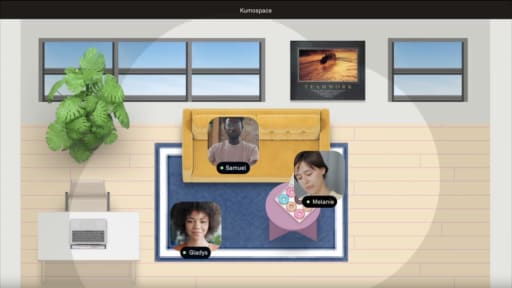
  5. Consider virtual office tools like Kumospace. A strong home setup paired with a persistent virtual workspace where distributed teams can meet daily replaces the traditional office. Spatial audio and always-on presence reduce isolation while maintaining deep-work focus.

Candidates with professional, well-lit setups consistently make stronger impressions during 48-hour Match Day hiring events than those with audio issues or cluttered backgrounds.

Core Furniture: Desks, Chairs, and Layout

The furniture you choose forms the foundation of your home office. Poor foundations lead to structural failures both literally, with wobbly desks, and metaphorically, with reduced productivity. Engineers spending long hours at their desks need furniture that supports sustained focus without causing physical strain.

Here’s what to prioritize:

Electric standing desk. Look for models with:

  • At least 48” x 24” surface space for a laptop, 1–2 computer monitors, and peripherals
  • Steel frames rated for 120kg+ dynamic load capacity
  • Dual-motor systems with memory presets for quick height adjustments
  • Height range of 25-50 inches to accommodate sitting and standing

Popular options in 2026 include the Fully Jarvis ($600-900), Ergonofis Sway ($700-1,000), and Uplift V2 ($600-850). Avoid cheap particle board tops; hardwood or bamboo surfaces resist scratches and last longer.

Cable management built-in. Desks with cable cutouts, grommets, or under-desk cable trays keep chargers, monitor cables, and docking station cords off the floor. This prevents clutter and helps maintain a professional mindset.

Ergonomic chair essentials. Your office chair should include:

  • Adjustable seat height and depth
  • Lumbar support that conforms to your spine’s natural curve
  • 3D or 4D armrests
  • Breathable mesh back

Optimal desk placement. Position your desk near a window for natural light, but angle monitors perpendicular to the window to avoid glare. Leave wall space behind your monitor for art, shelving, or a gallery wall visible during video calls, creating visual interest without cluttering your desk.

Small space solutions. For apartments or shared rooms:

  • Wall-mounted folding desks save space when not in use
  • Narrow-depth desks (under 20”) fit tight corners
  • L-shaped layouts separate “focus” from “admin” zones

Two-person setups. For couples or roommates both working in tech, consider back-to-back or side-by-side desks with shared shelving. Clearly mark individual zones with desk pads or accessories to maintain psychological boundaries.

Monitors, Webcams, and Audio for Remote Collaboration

Engineers and product teams live in code editors, dashboards, and video calls. Your display and audio setup matters as much as your CPU speed, possibly more when it comes to daily comfort and collaboration quality.

Primary monitor recommendations:

  • Minimum: 27” QHD (2560 x 1440) for coding and design work
  • Ideal: 32” 4K for maximum screen real estate
  • Dual-monitor setups excel for IDE + docs + CI dashboards simultaneously

Ultrawide monitors (34” or 38”) work exceptionally well for developers juggling terminals, GitHub, and Kumospace or Zoom windows. Look for pixel density around 110 PPI and refresh rates of 60Hz+ for smooth scrolling through code.

Monitor positioning. Mount external monitors at eye level using monitor arms or a stand to prevent neck strain. The top of the screen should sit at or slightly below eye level, about an arm’s length away, roughly 20 to 30 inches.

Webcam setup for interviews and standups:

  • 1080p minimum, 4K preferred (Logitech Brio, Elgato Facecam)
  • Mount above your main monitor, not to the side
  • Add a screen light bar (BenQ ScreenBar) for even lighting without glare

Audio that doesn’t embarrass you:

  • USB microphone: Blue Yeti, Elgato Wave 3, or Rode NT-USB Mini
  • Quality headset: Jabra Evolve2 75 or Sony WH-1000XM5
  • Noise-cancelling over-ear headphones for focus blocks

Background control. Use a neutral wall, bookcase, or curated art instead of clutter. Blue walls or forest green accent walls photograph well. Avoid artificial lighting that casts harsh shadows, and layer natural light with a ring light or desk lamp for balanced illumination.

Connectivity, Security, and Essential Tech

Nothing derails a technical interview or production deployment like dropped connections. Investing in reliable connectivity and strong security practices is essential for professional remote work.

Router upgrades for 2026:

  • Wi-Fi 6 routers: Asus ZenWiFi XT8 mesh kits for multi-room coverage
  • Wi-Fi 7 routers: TP-Link Archer BE800 for large homes with multiple remote workers
  • Budget option: TP-Link Archer AX55 for reliable single-room coverage

Wired Ethernet when possible. For stable video calls and pushing large repos or Docker images, nothing beats a physical connection. Run a flat Ethernet cable along baseboards if your modem is in another room; it’s worth the effort.

Backup and reliability:

  • External SSDs for local backups
  • Time Machine (Mac) or Windows Backup configured
  • Uninterruptible power supply (UPS) to ride through brief power blips, a $100-150 investment that protects against lost work and corrupted files

Seamless connectivity and secure practices also improve your experience in virtual offices like Kumospace.

Desk Lamps, Desk Pads, and Everyday Accessories

Small comfort details compound over hundreds of work-from-home days. These accessories may seem optional at first, but daily use quickly makes them essential.

Adjustable LED desk lamps:

Monitor-mounted lamps like the BenQ ScreenBar series ($100-150) save desk space and evenly light your keyboard and notebook, reducing eye strain during long hours

Desk pads and mats:

  • Full-grain leather desk pads (Harber London, $80-120) protect the desk surface and improve mouse tracking
  • Large linoleum or microfiber mats fit a mechanical keyboard, trackpad, and notebook
  • Choose colors that complement your room and look clean on camera

Smart cable management:

  • Magnetic cable wranglers for quick-access charging cables
  • Under-desk cable trays to hide power strips and adapters
  • Velcro wraps for bundling USB-C hubs and monitor cables

Personality touches that work:

  • A small scented candle or diffuser (subtle work-specific scents can trigger focus responses)
  • Minimal analog clock
  • Quality pen set and notebook for sketching diagrams

Keep personal items tasteful and minimal. Understated decor matters for morale during long sprints and on-call rotations, but clutter-free surfaces keep your mind focused.

Storage, Organization, and Job-Specific Gear

Clutter directly affects concentration for deep work such as debugging complex systems or training ML models. Research in cognitive psychology shows that visual clutter reduces executive function, making messy desks measurably less effective for complex tasks.

Filing and documents:

  • Compact filing cabinets or rolling carts (Branch Small Filing Cabinet, $200-300) for contracts, tax paperwork, and employment documents
  • Even fully digital roles accumulate physical paperwork, so have a system ready

Flexible storage solutions:

  • Mustard Made–style lockers: Visually interesting storage that doubles as background decor
  • Ikea Ivar shelves: Modular and affordable for hardware, camera gear, or dev boards
  • Store items where they are easy to reach but not visible on your primary work surface

Organization systems:

  • Baskets and labeled bins hide loose cables, adapters, and testing devices
  • Clear containers for small electronics make finding items faster
  • Drawer organizers for desk drawers prevent junk accumulation

Job-specific storage ideas:

Role

Storage Needs

Content creator

Clothing racks, prop shelving, lighting storage

Product manager

Reference book shelves, whiteboard storage

Hardware/robotics engineer

Parts drawers, component bins, tool organization

Data scientist

External drive storage, notebook organization

Console or credenza: A small piece of furniture can house printers, routers, and charging stations, with cables fed through the back. This keeps your primary workspace clean while keeping essential gear accessible.

Hybrid Collaboration: Virtual Offices, Tools, and Meeting Zones

Your home office is not just for solo focus work. Daily collaboration happens through Kumospace, Zoom, Slack, and whiteboarding apps, so your space needs to support both deep work and real-time communication.

Create a “meeting zone” within your room:

  • Small side chair or compact loveseat for casual one-on-ones
  • Floor lamp for warmer lighting during brainstorming calls
  • Slightly different background angle for variety in long meeting days

Virtual office presence with Kumospace: Distributed teams can recreate the feel of a physical office using Kumospace’s persistent virtual rooms. Features that matter for engineering teams:

  • Spatial audio that mimics real office conversations
  • Dedicated “rooms” for engineering, product, and design
  • Always-on casual interactions without scheduling meetings
  • Desk icons that mirror people’s home setups

User studies show Kumospace reduces Zoom fatigue compared to back-to-back traditional video calls, a meaningful difference over weeks and months of remote collaboration.

Whiteboard and demo setups:

  • Wall-mounted whiteboards or peel-and-stick dry-erase sheets behind your camera
  • Use for quick sketches during technical interviews, sprint planning, or architecture discussions
  • Second camera or flexible webcam arm for demoing hardware or physical prototypes, especially for robotics and IoT engineers

Time-zone coordination:

  • Standardize meeting slots across North America, Europe, and LATAM time zones
  • Block “overlap hours” for synchronous collaboration
  • Make coordination easier across distributed hiring teams

Ergonomics, Health, and Long-Term Comfort

Engineers spending 8 to 10 hours at their desk face real risks of burnout and injury. Research indicates that around 40 % of remote workers report musculoskeletal pain or discomfort, particularly in the back, neck, and shoulders, linked to prolonged sitting and suboptimal home workstation setups.

Ideal posture fundamentals:

  • Feet flat on the floor (or on a footrest)
  • Knees at roughly 90 degrees
  • Hips slightly above knees
  • Back supported with proper lumbar support
  • Elbows at 90–110 degrees
  • Wrists neutral on the desk

Budget ergonomic upgrades:

  • Memory-foam seat cushions ($30-60)
  • Lumbar pillows for older chairs ($20-40)
  • Footrests for proper leg positioning ($25-50)

These extend the usability of non-ergonomic chairs while you save for a proper upgrade.

Standing desk usage tips:

  • Alternate between sitting and standing every 30–60 minutes
  • Use an anti-fatigue mat to reduce lower back pressure (reduces strain by 20-30%)
  • Keep screens at consistent height when switching positions using memory presets

Movement during work:

  • Walking pads or compact under-desk treadmills work for emails and async standups
  • Avoid them during deep-focus debugging, as the cognitive load is too high
  • Even low-intensity movement improves mood and energy

Eye health practices:

  • Follow the 20-20-20 rule: every 20 minutes, look at something 20 feet away for 20 seconds
  • Blue-light glasses or software filters (f.lux, Night Shift) in evening hours
  • Reduce eye strain with proper artificial lighting layered with natural light
  • Set smartwatch reminders for stretching breaks

Ergonomic investments typically recoup costs in six to twelve months through reduced sick days and sustained output. Many senior candidates have built routines around ergonomics and movement to stay productive across long startup cycles, a key factor in sustaining multi-decade careers.

Style, Personality, and Inspiring Examples

Your workspace should reflect how you work best. Here are distinct home office ideas that engineers have used successfully:

Minimalist setup:

  • Clean wood desk with matte black accessories
  • One large monitor, maximum two
  • Single art piece or photography print
  • Hidden storage in drawers and closed cabinets
  • Best for: Focus-intensive coding, distraction-sensitive workers

Bright, plant-rich setup:

  • White walls with open space feel
  • Light wood desk, trailing pothos and snake plants
  • Pegboard wall for tools or tech display
  • Gallery wall visible in video call background
  • Biophilic elements purify air and reduce stress

Bold and moody setup:

  • Dark forest-green or charcoal accent wall
  • Walnut or black desk with warm desk lamp lighting
  • Curated art or subtle LED signage
  • Bold colors that create dramatic video presence
  • Works well with concrete floors or industrial aesthetics

Gamer-creator hybrid:

  • Reclining ergonomic chairs with headrest
  • Panoramic ultrawide monitor
  • Nanoleaf or Govee light panels for adjustable smart lighting
  • Mechanical keyboard with RGB lighting
  • Movable workstation for filming content creator videos

Small-space WFH corner:

  • Floating shelves above narrow desk to create visual height
  • Vertical decor to draw the eye up in compact room
  • Cable channels painted to match the wall
  • Foldable chair or stool stored under desk
  • Proves you don’t need a dedicated room to have a polished wfh setup

WFH Routines, Boundaries, and Career Tips for Engineers

A well-designed home setup is only half the equation. How you use your space determines whether remote work supports or undermines your career.

Clear start and stop rituals:

  • Consistent start time, even without a commute
  • Change out of sleepwear before sitting down
  • Shut down or dock the laptop at day’s end
  • Physically leave the workspace to mark “off” hours
  • These boundaries protect mental health and prevent burnout

Time blocking and theme days:

  • Monday: Deep work (feature development, architecture)
  • Tuesday: Collaboration (standups, pair programming, reviews)
  • Wednesday: Mixed (morning focus, afternoon meetings)
  • Minimize context switching by batching similar work

Preparing for remote interviews:

  • Test wi fi, audio, and lighting the day before
  • Clear your background of distractions
  • Keep water nearby
  • Close unnecessary browser tabs
  • Have your IDE, portfolio, and relevant repos ready to share

Reducing isolation:

  • Participate in virtual coworking or Kumospace focus rooms with colleagues
  • Schedule regular video coffee chats with teammates
  • Keep open space in your calendar for spontaneous collaboration

Conclusion

A thoughtful home office combines ergonomics, technology, organization, and intentional routines to support both deep focus and collaboration. Investing in quality furniture, monitors, connectivity, and wellness practices pays dividends in productivity, health, and career longevity. Coupled with virtual tools like Kumospace and disciplined work habits, a well-designed remote workspace allows engineers and product teams to perform at their best, stay connected across time zones, and make a strong impression during hiring and collaboration. In 2026, mastering your home office is no longer optional; it is a key factor in sustaining high performance and thriving in distributed, high-growth environments.

Frequently Asked Questions

Transform the way your team works from anywhere.

A virtual office in Kumospace lets teams thrive together by doing their best work no matter where they are geographically.

Headshot for Sammi Cox
Sammi Cox

Sammi Cox is a content marketing manager with a background in SEO and a degree in Journalism from Cal State Long Beach. She’s passionate about creating content that connects and ranks. Based in San Diego, she loves hiking, beach days, and yoga.

Transform the way your team works.