Before we dive into specific motivators, let’s establish a shared language. Employee motivation fundamentally splits into two categories: intrinsic and extrinsic.
Intrinsic motivation comes from inside. It’s the driving force when engineers stay late debugging a model deployment not because anyone is watching, but because solving the problem is inherently satisfying. Intrinsic motivators include:
- Autonomy – Control over how work gets done
- Mastery – The drive to get better at meaningful skills
- Purpose – Connecting daily work to a bigger mission
- Relationships – Belonging to a team you respect
- Progress – Visible movement toward goals that matter
- Personal growth – Opportunities to develop and expand one's capabilities
Extrinsic motivation comes from outside. It’s the force behind switching jobs for a 30% salary bump or pushing to hit a quarterly bonus target. Extrinsic motivators include: rewards such as bonuses or other external incentives
- Pay – Base salary, equity, bonuses
- Titles – Senior Engineer, Staff, Principal
- Recognition – Public praise, awards, promotions
- Job security – Stable runway, clear expectations
The practical reality is that extrinsic motivators often get people in the door, while intrinsic motivators keep them performing at a high level over months and years.
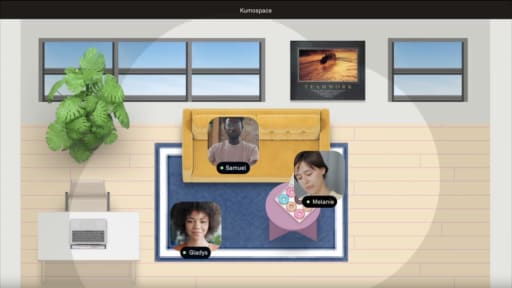
Distributed work and virtual collaboration spaces like Kumospace magnify certain motivators, connection and visibility especially, while weakening others if not managed deliberately. In a shared office, an engineer’s late-night effort is visible. In a remote-first work environment, that same effort can be invisible unless you design for recognition. This is why understanding motivation drivers matters more than ever for managers building high-performance teams.
These eight motivators are:
- Autonomy – Control over how work gets done
- Mastery – The drive to get better at what matters
- Purpose – Connecting daily work to a bigger mission
- Recognition – Being seen and appreciated, precisely
- Rewards – Fair, transparent, and understood compensation
- Relationships – Belonging on a distributed team
- Progress – Visible movement toward meaningful goals
- Security – Stability in a volatile tech market
While all motivators are important, some, such as recognition and purpose, are often cited as a key factor in employee retention and high performance.
Each motivator will be defined, linked to concrete behavior, and connected to actionable steps for leaders in AI startups and growth companies. These are not abstract concepts. They are patterns we observe in offer acceptance rates, interview feedback, and why engineers stay or leave.
Leaders should use this as a checklist when designing roles, compensation packages, onboarding plans, and remote collaboration practices. Understanding these factors is the first step toward building a workplace where engineers want to perform, not just show up.
Autonomy: Control Over How Work Gets Done
Autonomy means freedom to choose tools, approaches, and schedules within clear constraints. It is not about working without direction. It is about owning the how while aligning on the what.
Consider an ML engineer deciding how to structure a RAG pipeline. They might choose between LangChain and custom orchestration, evaluate different vector databases, and determine their own work schedule while hitting a product deadline set by the team. That is autonomy in action.
Research consistently shows that autonomy predicts job satisfaction, especially for senior engineers and staff-level individual contributors. Many employees value autonomy because it gives them flexibility and control over when, where, and how they work. When employees feel they can make their own decisions about their work, engagement increases and turnover decreases.
For founders and managers:
- Set outcome-based goals (e.g., “reduce inference latency by 30% before June 2026”) and let engineers choose the implementation path
- Avoid prescribing specific technologies unless there’s a genuine constraint
- Trust engineers to manage their time; focus on output, not hours logged
Virtual office platforms like Kumospace can support visible autonomy. Engineers choose when to dive deep or pair-program, but remain easy to reach for coordination. The key is creating presence without surveillance.
Mastery: The Drive to Get Better at What Matters

In fast-moving areas like LLMOps, reinforcement learning, and scalable backend design, the skills that matter today may be table stakes tomorrow. Engineers who stop learning become anxious or start looking elsewhere.
Mastery is the desire to deepen skills: becoming the go-to person for vector database optimization, multi-tenant SaaS architecture, or production ML observability. Skill development, growth opportunities, and career growth are essential motivators at work for technical talent, as they drive engagement and retention by providing clear paths for advancement and continuous learning. It’s one of the most powerful intrinsic motivators for technical talent.
For founders and managers:
- Budget explicit time (10–20% of weekly hours) for focused learning, spikes, and internal demos
- Encourage engineers to present what they learn to teammates
- Support conference attendance, course budgets, and open-source contributions
Create visible mastery paths, junior to mid to senior to staff, with concrete milestone skills. Share these in onboarding documents and performance reviews. When engineers can see the path to get better, they are more motivated to walk it.
Purpose: Connecting Daily Work to a Bigger Mission
Purpose means understanding how a specific task, building a ranking algorithm, optimizing an embedding pipeline, or reducing checkout latency, improves real users’ lives.
AI startups can articulate a one-sentence mission, for example, “Help non-technical teams safely deploy AI copilots by Q4 2026,” and connect each squad’s daily work to this mission. When engineers understand the why behind their tickets, they work harder and with more care. When employees understand how their work contributes to company goals, they are more motivated to achieve both personal and organizational objectives.
For founders and managers:
- Share user stories and before/after metrics in monthly all-hands
- Give engineers direct access to customer feedback (support tickets, NPS comments, user interviews)
- Map each sprint’s work to specific company goals
This is how employees feel connected to something larger than their individual contributions.
Recognition: Being Seen and Appreciated, Precisely
Recognition matters, especially in distributed teams where effort is less visible than in a shared office. When done well, recognition drives engagement. When missing, engineers feel invisible and start wondering if anyone notices their contribution.
Effective recognition is specific and timely. Not “great job,” but “Your refactor of the feature flag service cut deploy risk by 40 percent, which unblocked our April 2026 launch.” Precision shows you actually paid attention. Consistent positive feedback helps employees feel valued and significantly boosts employee morale, reinforcing their contributions and encouraging ongoing motivation.
For founders and managers:
- Normalize lightweight shout-outs during standups, retros, and via Slack or email
- Align praise with company values (e.g., ownership, thoughtfulness, bias awareness in code reviews)
- Create visible channels where wins are shared across the organization
Consider using Kumospace celebration corners or recurring social rooms to publicly acknowledge big milestones like closing a Series B, shipping a 1.0 release, or hitting a performance target
Rewards: Fair, Transparent, and Understood
Rewards span both intrinsic, such as learning and impact, and extrinsic, such as salary, equity, bonuses, remote stipends, or other forms of reward. Clarity and transparency from employers often matter more than size.
An engineer earning $180,000 at a company with opaque compensation bands may feel less motivated than one earning $165,000 at a company where salary bands, equity ranges, and promotion criteria are fully documented and visible.
For founders and managers:
- Publish salary bands and equity ranges internally (and externally if you’re bold)
- “Re-sell” existing rewards by clearly explaining benefits like health coverage, learning budgets, conference travel, or home office stipends
- Don’t assume employees appreciate what they don’t know about
- Employers should consider offering flexible working arrangements as part of their rewards strategy
Test non-financial extrinsic motivators such as paid time for personal ML projects, mentorship slots with senior architects, or flexible work-life balance policies and measure their impact over one to two quarters.
Annual reviews can be used as an opportunity for employers to reassess and communicate rewards and benefits to employees, ensuring ongoing engagement and motivation.
Relationships: Belonging on a Distributed Team
Strong, supportive relationships remain one of the top reasons engineers stay, even in fully remote contexts. Building strong relationships among employees contributes to a positive workplace culture, which encourages engagement, collaboration, and overall job satisfaction. Connection is not a nice-to-have; it is a fundamental part of the employee experience.
Cross-functional squads of PM, design, backend, ML, and data that know each other personally move faster, handle incidents better, and solve problems more creatively. When colleagues trust each other, coordination costs drop.
On the flip side, when relationships are weak, teams may experience frustration and higher turnover.
For founders and managers:
- Implement virtual coffee rotations and small-group problem-solving sessions
- Pair new hires with “onboarding buddies” for their first 60–90 days
- Create space for non-work conversation in team meetings
Virtual office platforms like Kumospace can recreate “hallway moments” and shared presence, helping engineers form relationships and feel part of a real team instead of a ticket factory.
Progress: Visible Movement Toward Meaningful Goals

Progress is the sense that today moved the needle on something important, not just closing Jira tickets, but advancing toward a meaningful goal. It is one of the most underrated motivators in engineering organizations.
Engineers are strongly motivated by clear milestones, such as alpha, beta, and GA dates, and objective metrics like latency improvements, feature adoption rates, and error reduction. Having systems in place to track progress toward these goals is essential for maintaining motivation and ensuring everyone knows where they stand. When progress is visible, motivation sustains itself. In fact, when employees are asked about what motivates them, seeing progress is often the top answer.
For founders and managers:
- Keep roadmaps and OKRs visible to everyone, updated at least monthly
- Map each sprint to specific company-level team goals
- Host weekly demo days where engineers show what shipped
Practices like progress dashboards and shared wins channels ensure even incremental advances are recognized. Goal setting that connects individual work to company performance keeps everyone aligned.
Security: Stability in a Volatile Tech Market
After the 2022–2025 tech layoffs, job security and psychological safety have become major motivators for engineers. Security is not weakness, it is a legitimate need that great leaders acknowledge.
Security includes both financial stability, such as runway clarity and reliable compensation, and role clarity, including clear expectations and low surprise-factor in performance management. When employees feel secure, they take more creative risks. Clear communication and well-defined expectations foster a greater sense of security and trust among employees.
For founders and managers:
- Share runway details, hiring plans, and risk scenarios periodically
- Provide proactive performance management with regular check-ins and clear improvement plans to ensure employees are meeting expectations
- Avoid surprise terminations or opaque stack-ranking systems
Transparent performance reviews, clear promotion criteria, and honest communication about company health all contribute to security. Engineers who understand the risks make better decisions and stay longer when expectations match reality. Providing security and clarity helps build employee loyalty over time.

Motivation connects directly to measurable outcomes such as employee retention, velocity, quality, and referrals. You cannot improve what you do not measure, but it should not be reduced to a single number.
Recommended approach:
- Lightweight pulse surveys (quarterly) – Ask specifically about autonomy, mastery, purpose, and security rather than vague “engagement” scores. Quarterly reviews can provide deeper insights into employee satisfaction and help identify trends that may not be visible in more frequent, lightweight surveys.
- Track leading indicators – Time-to-ship, internal transfers, participation in learning programs, attrition in key squads
- Combine qualitative and quantitative data – 1:1 notes and retro themes alongside cycle time and offer acceptance rates
Pay attention to trends, not just snapshots. A single quarter of low scores may reflect a stressful launch, but multiple quarters of decline indicate a systemic problem. Use survey data to drive action: investigate processes causing low autonomy, ensure learning time protects mastery, and remove friction wherever possible.