You probably pride yourself on being able to handle multiple things at once. Checking Slack while on a video call, scanning email during a meeting, toggling between spreadsheets and chat windows; it feels like you are being productive. But decades of cognitive psychology research tell a different story: your brain isn’t actually performing multiple tasks at the same time. Instead, it is rapidly switching between them, and each switch carries a hidden cost in focus, efficiency, and mental energy. Over time, this constant multitasking can lead to mistakes, slower work, and increased fatigue, even if it feels like you are accomplishing more.
Fast answers: Does multitasking actually work?
Let’s cut to the chase. When you think you are handling two or more tasks at the same time, your brain is actually performing a high-speed juggling act called task switching. True parallel processing, doing multiple cognitive tasks simultaneously with full attention, is largely a myth for complex work.
Here’s what the research shows:
- Error rates increase significantly when people attempt to complete tasks while dividing attention
- Drivers using cell phones (even hands-free) show reaction times comparable to intoxicated drivers
- Students who engage in media multitasking during lectures consistently show lower academic performance and retention
- Heavy media multitaskers demonstrate reduced working memory capacity and greater distractibility
Whether in psychology labs, driving simulators, or real-world classrooms, the evidence shows frequent multitasking hurts quality, speed, and learning.
The good news is that modern tools and virtual office platforms like Kumospace can help reduce harmful multitasking by structuring focus time, creating clear communication channels, and establishing team norms around continuous partial attention. Understanding the science is the first step toward working smarter.
What is multitasking, really?

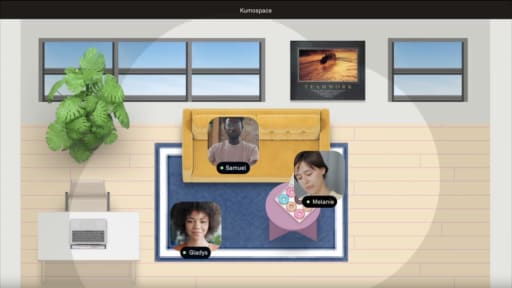
Multitasking refers to working on two or more tasks simultaneously or switching rapidly between them in quick succession. Picture a Monday morning: you’re in a Kumospace meeting while answering email and glancing at your project management tool. It feels like you’re handling everything at once.
But here’s the distinction that matters. There is a significant gap between perceived multitasking, the feeling that you’re doing many things at once, and what your brain is actually doing. You are not a computer running multiple programs at once; you are more like a single-core processor rapidly switching contexts.
True parallel processing in humans is mostly limited to pairing one conscious, demanding task with one highly automated task. Walking while talking works because walking requires minimal conscious attention for most adults. Chewing gum while solving math problems is manageable because chewing is automatic. But coding while monitoring a complex chat discussion leads to interference.
Consider a teacher lecturing while replying to administrative texts. Each glance at their phone temporarily disrupts the lecture. Or driving while talking on the phone, which competes for the same cognitive resources. A remote worker writing a report while watching television and responding to instant messages is not handling three streams efficiently; they are doing three things poorly.
These examples appear throughout daily life. A surgeon reviewing charts while listening to a briefing. A parent helping with homework while on a work call. A student attending class in Kumospace while keeping TikTok open in another tab. In each case, the brain must choose which task set gets attention at any moment, and something always loses.
Human multitasking and the brain
Cognitive psychology and neuroscience have spent decades examining how mental processes handle competing demands, and the findings are remarkably consistent: the brain has fundamental limitations that prevent true simultaneous processing of complex tasks.
The processing bottleneck
At the heart of multitasking difficulty lies what researchers call a processing bottleneck. The brain’s executive system, responsible for planning, decision-making, and goal management, must choose which task’s rules to apply at any given millisecond. It cannot fully engage two demanding task sets at once.
Think of it like a narrow doorway that only allows one person through at a time. When you are writing an email and someone asks you a question, your executive control must disengage from email-writing mode, identify the new task, locate the relevant parameters, and then engage. This sequence takes measurable time even when it feels instantaneous.
Imaging studies using fMRI show overlapping brain regions activate for different tasks, creating neural interference when two demanding activities compete. A 2010 French fMRI study suggested the brain can pursue at most two goals simultaneously, with each goal potentially processed by one frontal lobe, and even this limited dual-processing degrades performance on both tasks.
Working memory constraints
Working memory, the brain’s mental workspace for holding and manipulating information in real time, has severe capacity limits. Research suggests working memory can hold about four chunks of information at once. Managing a Kumospace standup, tracking an email thread, and updating a spreadsheet simultaneously exceeds this capacity.
The result is confusion, errors, and a constant feeling of being behind. You might forget what someone just said in a meeting because your attention was on an email, or enter wrong numbers in a spreadsheet because your focus flickered to chat. These outcomes are not personal failures; they are predictable consequences of exceeding cognitive load limits.
Task switching and switching costs
Task switching is the shift of attention and mental “settings” from one task to another. Each transition, from writing a document to responding to a chat, requires reconfiguration, known in research as a switch cost.
Switch costs appear as time delays, small mental blocks, and increased errors with each transition, even when switches are predictable and practiced. In a typical workday with frequent task changes, these delays accumulate into minutes and hours of lost productive time.
For example, a project manager switching between timeline planning, Slack conversations, and a Kumospace meeting throughout the morning must disengage, reorient, recall context, and re-engage each time. By lunchtime, significant momentum is lost, and thinking must be repeatedly “rebooted.”
The insidious part is that switch costs are often invisible. People overestimate how efficiently they multitask because the delays feel seamless. Only when output is measured do the losses become clear.
Continuous partial attention and media multitasking
Continuous partial attention describes monitoring multiple inputs, like social media, email, chat, streaming video, or virtual office notifications, at low levels instead of focusing deeply. This has become a default state for many knowledge workers and students.
Media multitasking has accelerated since the 2000s, with people watching TV while texting, gaming while on voice chat, or scrolling feeds during online classes or virtual meetings. Research shows heavy media multitaskers have reduced sustained attention, lower working memory performance, and greater distractibility. They perform worse on tasks requiring filtering irrelevant information, contrary to the belief that multitasking improves this skill.
Some studies suggest subtle benefits, such as slightly faster integration of audio and visual information for heavy media multitaskers. Overall, however, the evidence leans toward negative impacts on deep work, learning, and sustained concentration. Rapid integration of sensory streams does not compensate for the reduced capacity to focus deeply when it matters.
What the research shows about productivity and performance

The scientific consensus is clear: handling multiple complex tasks at the same time leads to lower productivity, more errors, and slower completion.
Even when people feel more productive while multitasking, objective measures tell a different story. Speed decreases, accuracy drops, and comprehension suffers. A remote team constantly connected via chat may feel responsive and engaged, but measured output often lags behind teams that batch communication and protect focus time. The gap between felt productivity and measured productivity explains why multitasking habits persist. Immediate satisfaction masks the deeper inefficiency, and only deliberate measurement reveals the truth.
Driving, safety, and multitasking
Multitasking while driving, especially using a phone, greatly increases crash risk and slows reaction time. Research from the 2000s and 2010s found reaction times similar to drunk driving. The cognitive load comes from the conversation, not holding the phone. A driver glancing at navigation while reading a text may miss a pedestrian or stoplight, adding critical milliseconds to reaction. These patterns are well documented and have influenced laws restricting phone use while driving. Risk rises further in poor weather, heavy traffic, or unfamiliar routes, exactly when full attention is most needed.
Learning, students, and multitasking
Students who multitask during lectures or study sessions consistently score lower and take longer to complete assignments. Working memory bottlenecks make it difficult to integrate new information when switching to messages or entertainment. A student watching a lecture in one tab while gaming in another or keeping multiple chat windows open will absorb fragments rather than coherent knowledge. Focused study sessions, device-free blocks, and Kumospace breakout rooms for distraction-free work can mitigate these effects, showing that environment design is as important as willpower.
Teens, media, and brain development
Adolescence is a sensitive period for brain development, especially in the prefrontal cortex and executive functions. Heavy media multitasking during these years is associated with higher impulsivity, lower sustained attention, and potential long-term habits of shallow engagement. Teens juggling short-form videos, messaging, music, and homework in digital spaces face constant distraction. Interventions like device-free blocks, structured study sessions, and dedicated virtual spaces in Kumospace help build habits that support deep focus while still using technology.
Executive control: Why multitasking feels hard
Executive functions act as the brain’s project manager, coordinating working memory, inhibitory control, and cognitive flexibility. Each task switch requires goal shifting and rule activation. Switching from coding to a Kumospace meeting or from spreadsheets to Slack triggers these steps repeatedly. Micro-delays accumulate across the day, reducing productivity. True “supertaskers” who multitask without performance loss are rare, likely 2 to 3 percent of the population. Most people who believe they are exceptional multitaskers perform worse on objective tests. The overhead is similar to a carpenter switching tools repeatedly instead of completing each step in sequence.
Why mistakes multiply when you juggle tasks
Partial attention reduces the brain’s ability to catch errors in real time. When you’re fully focused on a single task, you notice typos, mis-sent emails, and mis-entered numbers. When attention is divided, these errors slip through.
Error rates especially increase in complex, non-automated tasks. Programming errors multiply when coders switch contexts frequently. Medical decision-making suffers when clinicians are interrupted repeatedly. Financial analysis goes wrong when analysts juggle multiple data streams without protected focus time.
When multitasking seems to work (and when it doesn’t)
Not all multitasking is equally harmful. The key distinction lies between low-risk, low-complexity multitasking and high-stakes cognitive multitasking.
Folding laundry while listening to a podcast? Generally fine. But analyzing data during a negotiation call? Writing code while monitoring a complex discussion? Driving in heavy traffic while composing a text message? These pair two demanding tasks that both require conscious attention, and interference is inevitable.
The pattern holds: pairing one automatic task with one thinking-intensive task can be acceptable for many people. Pairing two demanding tasks usually leads to interference, errors, and slower completion.
Myths about “good multitaskers” persist despite the evidence. People who multitask frequently often believe they’re better at it than average.
Well-structured digital workspaces can help separate “focus zones” and “collaboration zones” to reduce harmful overload while keeping teams responsive. Kumospace, for instance, allows teams to create different spaces for different work modes. This spatial organization mirrors how physical offices once separated library-quiet zones from buzzing common areas.
Breaking the multitasking habit: Practical strategies

Understanding the science is valuable, but change requires action. This section provides concrete methods to reduce harmful multitasking at work, in school, and at home.
Start by auditing a typical day or pick a specific date and track how often you switch tasks. You might be surprised. Some people switch apps or tabs dozens of times per hour without realizing it. Awareness is the foundation for change.
Here are high-level strategies that research supports:
Timeboxing: Allocate specific blocks for specific tasks. From 9-10am, you work on the report. From 10-10:30, you process email. During the report block, email stays closed. This reduces random switching and creates predictable switch points.
Batching similar tasks: Group related activities together. Answer all emails in one session rather than responding to each as it arrives. Make all phone calls in a single block. This reduces the cognitive overhead of constantly shifting between different tasks.
Notification hygiene: Turn off non-essential notifications. Every ping pulls attention and triggers a potential switch. Be ruthless; most notifications can wait until your next scheduled check-in.
Device separation: Keep phones out of sight during focus work. Studies show the mere presence of a smartphone reduces cognitive capacity even when not in use. Physical distance creates psychological distance.
Environment design: Create spaces that support focus. This might mean a clean desk, a specific “focus” browser profile with limited tabs, or using separate devices for work and entertainment.
Structured collaboration windows: Remote and hybrid teams can use Kumospace to schedule focus blocks, establish quiet floors, and create clearly timed collaboration sessions instead of constant ad-hoc interruptions. When everyone knows that 2-4pm is deep work time, the pressure to respond instantly diminishes.
Small changes to digital habits can reclaim significant productive time. You don’t need perfect discipline; you need systems that make focusing the default.
Single-tasking and focus techniques
Single-tasking means intentionally doing one meaningful task at a time without voluntarily switching. It’s the opposite of the fragmented attention that multitasking produces.
The Pomodoro Technique offers a structured approach: 25 minutes of focused work followed by a 5-minute break. After four cycles, take a longer break. The time constraint creates urgency, and the guaranteed break prevents burnout. For deeper work, adapt the intervals; 60 or 90-minute focus blocks suit complex creative or analytical tasks better.
When intrusive thoughts or to-dos arise during focus time, write them down instead of acting on them immediately. A simple notepad beside your keyboard or a quick digital list captures the thought so your brain can release it. After your focus block, you can decide which captured items actually need attention.
Virtual offices like Kumospace can support single-tasking through visibility and norms. Status indicators (“deep work,” “available,” “in meeting”) signal to colleagues when interruption is appropriate. Private rooms provide distraction-free spaces. Scheduled “no meeting” hours give everyone permission to fully focus without guilt about missing something.
The key insight: single-tasking isn’t about willpower. It’s about designing conditions where focus becomes the path of least resistance.
Designing environments that discourage multitasking
Your physical and digital environment can either encourage or discourage constant switching. Open tabs create temptation. Multiple monitors invite spreading attention thin. Noisy notifications demand response. Crowded workspaces generate interruptions.
Concrete environmental tweaks help limit distractions:
- Group similar apps so you’re not constantly navigating between unrelated tools
- Limit visible tabs to only what your current task requires
- Schedule check-in times for email and chat rather than leaving them always-on
- Turn off non-essential alerts on both computer and phone
- Use “do not disturb” modes during focus blocks
Team norms matter as much as individual settings. When teams establish “focus hours,” everyone benefits. Meeting-free mornings or afternoons create space for deep work. Status indicators in tools like Kumospace reduce the expectation of instant responses without eliminating responsiveness entirely.
Conclusion
The science of multitasking is clear: humans mainly task-switch, and each switch reduces productivity and increases errors. Complex or safety-critical work suffers most, while even routine tasks degrade under constant interruption. The solution is not superhuman focus but smart design; using virtual offices like Kumospace, timeboxing, notification hygiene, and single-tasking to protect attention. Small, consistent changes in habits and environment improve focus, efficiency, and outcomes. The evidence exists, the tools are available, and choosing to focus is up to you.
Frequently Asked Questions
Multitasking usually means rapid task-switching, not true simultaneous processing, which reduces focus and efficiency.
Switching between complex tasks can significantly reduce effective productive time during a workday.
Pairing an automatic task, like walking or folding laundry, with a thinking-intensive task is usually manageable.
Tools like Kumospace, timeboxing, and notification controls can create focus blocks and structured collaboration to minimize harmful switching.
Divided attention lowers comprehension, memory, and reaction times, which impacts students, drivers, and anyone performing complex tasks.