Are your team huddles feeling stale and unproductive? Don’t worry; you’re not alone. The key to effective team huddles lies in finding the right balance between structure and creativity. In this blog post, we’ll explore practical tips and ideas to revitalize your team huddle meetings in 2024. By the end of this post, you’ll have the knowledge and inspiration to run more engaging, productive, and collaborative team huddles, whether your team is in person or remote.
Creative thinking is essential for team huddles, as it leads to more engaging and innovative meetings that encourage problem-solving and collaboration.
Key takeaways
- Team huddles are an effective tool for boosting communication, collaboration, and productivity in the workplace.
- Encourage participation with clear agendas and track progress to stay on course and reach goals faster.
- Implement creative ideas such as icebreakers & team building activities to motivate your team & celebrate successes. You don’t have to spend a lot of time or resources to make huddles effective.
- Starting with a simple icebreaker can help lighten the mood and foster personal connections among team members.
The importance of team huddles

Team huddles have their roots in sports, where teams gather to strategize and motivate themselves before a match. In the workplace, daily huddle meetings can be a powerful way to boost virtual team building, team alignment, communication, and productivity. Huddles are used in various industries, from tech to healthcare, to help teams work better together. Standing during huddles can help keep the meeting short and focused, encouraging urgency and efficiency.
We’re going to explore the essential aspects of team huddles that contribute to the effectiveness of modern work environments: enhancing team communication, fostering collaboration, and boosting productivity. Huddles are designed to engage the whole team, ensuring everyone is included and involved in the discussion.
Enhancing team communication
Holding daily team huddles on a regular basis can lead to a marked improvement in communication among team members. A single daily huddle is sufficient to keep everyone updated on the latest company developments and prevent meeting fatigue. Utilizing tools like Kumospace can further enhance team communication by fostering conversations and keeping everyone informed.
A quick check-in on each team member's current mood, such as asking for a one-word description or sharing an image that reflects how they feel, can help foster open communication and empathy within the team.
Establishing regular team huddles and using effective communication tools like Kumospace can create an environment where everyone stays in the loop and feels comfortable asking for help when needed. This can lead to more efficient problem-solving and collaboration.
Fostering collaboration
A welcoming and inclusive atmosphere during team huddles is fundamental to promoting effective collaboration. When team members feel comfortable expressing their thoughts and working together, it can strengthen the bonds between them and emphasize the importance of teamwork and collaboration. Encouraging all group members to participate in collaborative exercises ensures that everyone is engaged and helps build stronger team connections.
Guaranteeing every team member’s voice is heard and fostering a sense of ownership and accountability can enhance team performance and cultivate a successful team dynamic. This collaborative environment, where each team member contributes, can lead to more innovative ideas and better overall results.
Boosting productivity
To enhance productivity during team huddles, it’s necessary to set clear and smart goals, monitor progress, and celebrate achievements. A motivation huddle can provide the energy and support needed to complete a project or task, helping team members stay focused and on track.
Morning huddles can be especially effective in setting the tone for the day and ensuring everyone starts their day with clear goals and expectations. Employing efficient formats like the daily scrum enables quick and effective coverage of all important daily huddle agenda points, thereby maximizing productivity during the daily huddle meeting. Using efficient huddle formats can also help save time while still ensuring all key topics are addressed. To further enhance the effectiveness of these daily huddles, consider implementing some daily huddle tips. By focusing on only one daily huddle, your team can maintain a consistent routine and reap the benefits of this powerful communication tool.
Best practices for conducting team huddles

For optimal effectiveness of your team huddles, consider implementing these best practices: clear agenda setting, encouraging active participation, and tracking time and progress. These strategies can lead to more engaging and productive team huddles that keep everyone focused and on track.
Incorporating these best practices fosters an environment where team members are motivated and inspired to contribute their ideas and collaborate towards achieving common goals. Applying these best practices in a fun way, such as through interactive activities or games, can further boost engagement and motivation. This collaborative atmosphere can lead to a more successful and productive team in the long run.
Setting a clear agenda

A clear agenda for team huddles helps improve focus and ensures discussion of all important topics within the stipulated time. Assigning weekly meeting preparation tasks and creating a specific agenda for each huddle can optimize the effectiveness of each meeting. Including time to review action items and set goals for the next meeting helps set expectations and keeps the team engaged in ongoing progress.
Emphasizing huddle highlights can also help team members retain essential information and stay up-to-date, even if they missed the meeting. This well-structured agenda ensures that meetings run efficiently and achieve their desired outcomes.
Encouraging participation
Promoting participation in team huddles is key to nurturing a successful and productive team. Here are some strategies to encourage participation:
- Set clear expectations for all team members to contribute to the discussion.
- Reward participation to foster an open and inviting atmosphere.
- Offer prizes for activities like trivia contests or scavenger hunts to motivate participation and make huddles more engaging.
- Create a safe space for everyone to comfortably share their thoughts and ideas.
By implementing these strategies, you can create a team huddle environment that encourages active participation and collaboration.
Fostering a culture of active participation in team huddles, including the occasional management huddle, can lead to more engaging discussions, better problem-solving, and a stronger sense of camaraderie among team members. This, in turn, can boost overall team performance and productivity.
Monitoring time and progress
Tracking time and progress during team huddles helps maintain momentum, keeps the meeting on course, and aids in achieving team goals more quickly. Here are some effective ways to monitor time and progress:
- Set SMART goals
- Break goals into smaller steps
- Define deadlines and milestones
- Document progress
- Review achievements or challenges from the previous day
By implementing these strategies, you can ensure that your team stays on track and achieves its goals efficiently.
Additionally, using a dedicated time tracking method and considering reflective writing can help your team stay focused and accountable for their progress. This can lead to more efficient and productive team huddles, ultimately benefiting the entire team.
Adapting team huddles for remote work

As remote work rises in popularity, it has become increasingly important to adapt team huddles for remote teams. Remote teams can still benefit from the advantages of team huddles by choosing the right tools, such as Kumospace, and balancing synchronous and asynchronous communication methods.
Adjusting team huddles for remote work allows you to uphold the benefits of enhanced communication, increased collaboration, and improved productivity among your team members, regardless of their geographical location. Adapting huddles for remote work also helps keep employees engaged and connected, which is essential for maintaining morale and a strong company culture.
Choosing the right tools
Choosing suitable tools for remote team huddles is vital to facilitate effective communication and collaboration among team members. Platforms like Kumospace offer customizable templates and a range of interactive features, making them perfect for virtual huddles.
These tools can help remote teams stay connected and engaged during team huddles, ensuring that everyone is on the same page and working together effectively. By choosing the right tools, you can make remote team huddles just as productive as in-person meetings.
Kumospace

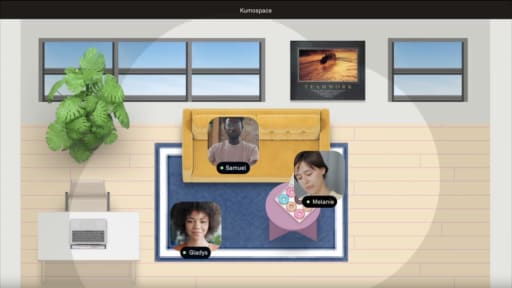
Kumospace stands out for remote team huddles with its spatial audio and video that allows participants to have more natural conversations by simply moving their avatars closer or farther from others, mimicking real-life interaction. Its collaborative tools, such as shared whiteboards and screen sharing, facilitate real-time teamwork, while the customizable environments enable teams to create a huddle space that suits their culture and meeting objectives. Kumospace also makes it easy for teams to meet in a different space, whether by switching virtual rooms or environments, which can boost creativity and engagement.
Additionally, Kumospace offers interactive features for informal social interactions, like virtual happy hours and games, fostering team building and camaraderie in a remote setting. These elements together make Kumospace a versatile platform for both structured team huddles and casual, engaging team interactions.
Balancing synchronous and asynchronous communication
For remote team huddles, striking a balance between synchronous and asynchronous communication is key to accommodating team members in different time zones and fostering productive communication. Synchronous communication, like video calls and live chats, allows for real-time connection, while asynchronous communication, such as emails and message boards, offers flexibility in scheduling.
By striking a balance between these two communication methods, remote teams can collaborate effectively and efficiently, ensuring that everyone has the opportunity to contribute and stay informed, regardless of their location or schedule.
Implementing creative huddle ideas

To maintain engagement in your team huddles and cultivate a positive team culture, it may be beneficial to introduce creative huddle ideas. Incorporating fun activities into your huddles can help maintain engagement and foster a positive team culture. In the following subsections, we’ll explore the benefits of virtual icebreakers and team-building activities, as well as the importance of celebrating successes and milestones during team huddles.
Icebreakers and team-building activities
Incorporating icebreakers and team-building games into your team huddles helps establish a relaxed and enjoyable atmosphere, thereby encouraging stronger connections among team members. Sharing fun facts is a great icebreaker to start huddles and helps lighten the mood. Engaging icebreakers like Draw and Guess, Two Truths and One Lie, or The Desert Island Game can help break the ice and encourage team members to open up and share their thoughts.
Dividing teams into small groups boosts participation and engagement. Activities like escape rooms, tallest tower, and cooking classes build trust, encourage creativity, and strengthen communication. Whether held offsite or in a conference room, team-building exercises foster collaboration, leadership, and camaraderie, making team interactions more effective and enjoyable.
Celebrating successes and milestones
Allocating time to celebrate successes and milestones during team huddles can significantly boost team morale and motivation. By acknowledging individual and team accomplishments, you can reinforce the value of teamwork and collaboration while also boosting employee engagement and satisfaction.
Incorporating celebrations into your team huddles can help create a positive team culture where everyone feels valued and appreciated. This, in turn, can lead to increased motivation, productivity, and overall team success.
Overcoming common team huddle challenges

While team huddles can offer immense benefits, they also pose certain challenges. In this section, we'll discuss how to overcome common team huddle challenges, such as managing conflicting schedules and handling difficult conversations.
By addressing these challenges effectively, your team can continue to reap the benefits of productive and collaborative team huddles.
Managing conflicting schedules
Managing conflicting schedules among team members is a common challenge in team huddles. To mitigate this issue, it is necessary to:
- Establish a consistent meeting time that suits all team members
- Demonstrate flexibility when required
- Collaborate and talk to each other to make sure the meeting time works for everyone
- Be willing to make changes if needed
By working together and being open to adjustments, team members can ensure that everyone can attend the daily team huddle and contribute to the discussion, despite any scheduling conflicts that may arise during a team meeting.
Handling difficult conversations
Difficult conversations in team huddles can be challenging, but handling them with respect and openness builds trust and understanding. Creating a safe space for honest dialogue and active listening helps teams resolve issues and grow stronger together.
Overall, team huddles are vital for improving communication, collaboration, and productivity. By balancing structure with creativity and adapting huddles to your team’s needs, you can foster a more engaged, connected, and motivated team.
Summary
Team huddles are short, focused meetings that boost communication, collaboration, and productivity when done well. The most effective huddles balance structure with creativity by using clear agendas, encouraging participation, and tracking progress toward shared goals. Simple techniques like icebreakers, team-building activities, and celebrating wins help keep meetings engaging without requiring much time or resources.
Huddles are especially valuable for remote and hybrid teams, where the right tools and a mix of synchronous and asynchronous communication help everyone stay connected and aligned. Best practices include setting a consistent meeting time, keeping discussions focused, and creating a safe space for open dialogue. When aligned with daily work and strategic goals, team huddles become a powerful habit that strengthens teamwork, builds trust, and keeps teams motivated and productive.
Frequently asked questions
Team huddles and meetings are both important gatherings for teams, but the major difference is that a team huddle is much shorter and less formal than a team meeting. Huddles usually last less than 15 minutes, while team meetings can go up to an hour or more.
A good team huddle engages all attendees, keeping the discussion interesting and relevant. The chair should ensure everyone has a chance to speak and provide an opportunity for each attendee to be asked how they feel. As part of the problem-solving process, triage any issues quickly and efficiently or take it offline after the meeting.
Stay connected and stay productive with reliable tools like Zoom, Google Meet, Switchboard, Microsoft Teams, and Kumospace for successful remote team huddles.
Let's make team huddles a safe and inviting place where everyone can share their ideas and work together! Let's foster collaboration in our huddles!