A virtual white elephant gift exchange, also called an online white elephant game, is a gift swap run over a video call where players take turns revealing a numbered, unopened gift or stealing one that’s already been revealed. To run one, set a budget and delivery model, randomize the turn order, and track steals and ownership in a shared list. Shipping is where the exchange can fall apart before anyone opens a gift. Packages arrive late, get lost in transit, or never show up, and a fun tradition turns into an awkward follow-up thread.
Key Takeaways
- A virtual white elephant is a gift exchange over a video call where players take turns revealing an unopened gift or stealing one already revealed, with ownership tracked in a shared list until the game ends.
- Remote teams can use physical gifts shipped before or after the game, digital gifts, or a hybrid of both, with house rules such as steal limits set before play.
- Shipping and time zones are the main extra challenges for a virtual white elephant game, and firm deadlines, a clear delivery model, and proxy players for absent teammates solve them.
What Is a Virtual White Elephant Gift Exchange?

A virtual white elephant gift exchange is the classic white elephant gift exchange run online over a video call for remote or hybrid teams. The format is also called Yankee Swap or Dirty Santa, and all three names describe similar steal-based mechanics. Each player brings one wrapped gift of similar value to the pool. On their turn, they either choose a new gift from that pool or steal an already opened one from someone else’s screen, until everyone ends up with a final gift.
The “wrapped” gifts can take three forms: real presents shipped in advance, digital white elephant gifts revealed on camera, or physical items shown by the giver and mailed later. White elephant gifts are often humorous or gag items, though plenty of groups prefer practical picks. Secret Santa quietly matches each person to one recipient for a more personalized gift. White elephant, by contrast, is a chaotic gift exchange game built around stealing and group reactions.
Any video conferencing platform, such as Zoom, Google Meet, or Microsoft Teams, can host the game as long as everyone can see and hear each other. A shared spreadsheet or slide deck also works for tracking gifts and turn order.
How to Play White Elephant Virtually
Remote play needs two things before the call:
- A numbered gift pool, so players choose by number rather than by giver.
- A shared tracker listing each gift’s physical holder, current owner, whether it’s been revealed, and its steal count.
Ownership changes in the tracker during the game, and physical delivery happens only after the final allocation. Before the game, share the rules and a short preparation checklist by email or team chat. The checklist should say which of three options applies: each player keeps their physical gift until after the game, sends it to a coordinator, or prepares a digital gift reveal.
Step 1: Set the date and budget
Pick a date at least two to three weeks out to allow time for shopping and shipping. Choose a clear per-person budget. A cap of $15 to $25 USD per gift is a reasonable starting point, and you should clarify whether that cap includes shipping costs. Send a calendar invite that includes:
- The video call link
- The spending limit
- Any gift theme
- The delivery model you’ve chosen
- The rule that each participant brings one physical or digital white elephant gift
Step 2: Collect or ship the gifts
For physical gifts, choose one of two delivery models. Either each player keeps their own gift until the game ends and then ships it to its final owner, or everyone sends gifts to one coordinator before the call. Whoever physically holds a gift reveals it on camera when its number is selected and ships it to its final owner after the game. If you’re running a digital exchange, participants can submit gifts online before the event starts. Give each gift a unique number or letter as its game label, kept separate from any shipping label. Ask whoever holds it to keep it sealed and out of sight until selected.
Step 3: Set the order of play
Set the order using any of these methods:
- Draw numbers from a hat on camera.
- Use a random number generator.
- List names in a random order in team chat before starting.
The player with number one goes first by choosing any wrapped gift. Keep the turn order visible by screen sharing a simple list during the video call.
Step 4: Open gifts on camera
On each turn, the active player chooses to unwrap a new gift or, after the first turn, steal an already opened white elephant gift from another participant. When a gift is selected, its physical holder reveals it on camera, or the organizer shows its digital reveal. To maintain the pace, allow 10 to 20 seconds for reactions while the host records the selecting player as the gift’s current owner in the shared tracker.
Step 5: Handle steals
A steal changes the gift’s owner in the shared tracker while its physical holder keeps it. The displaced player immediately reveals a new gift or steals another eligible revealed gift, but can’t take back the gift they just lost. The host should update ownership and steal counts in the tracker, announce whose turn it is, and resolve each chain of steals before moving to the next numbered player.
Step 6: Enforce a steal limit
A steal limit prevents endless swapping. A common house rule is that a gift can be stolen a maximum of three times during the main game, after which it’s frozen with its current owner. Opening a new gift doesn’t count as a steal. Choose your preferred rule before the virtual white elephant game and explain it in the invite. Keep a tally on a shared screen so everyone knows when gifts are frozen.
Step 7: Confirm the final allocation
Once every participant has had a turn and all steals are resolved, the organizer confirms in the shared tracker who ends up with which white elephant gift. If you allow a final swap, announce it before play: the first person may trade their gift once for any unfrozen gift, with no further chain of steals. End the game with lighthearted awards, such as “Most Ridiculous Gift,” for one last laugh.
Virtual White Elephant Rules and Variations

For a digital virtual white elephant gift exchange, ask each participant to submit a gift description or image for the numbered pool. Check that every potential recipient can redeem each gift, including any country, currency, or account restrictions. Reveal only the description or image during play, and keep redemption codes and claim links private until you send them to the final owners. You can use either classic stealing rules or a blind pick format.
- One wrapped gift per person
- No early opening
- A time limit per turn (45 seconds works well)
- A decision on whether the first player gets a final swap
Challenges and variations can make the game more entertaining. Examples include trivia questions between rounds or speed rounds where players grab a gift in under 10 seconds.
Classic steal
This is the standard format where each player can either open a new wrapped gift or steal any unfrozen revealed gift, with a chosen steal limit per gift. The game is most fun with groups of 6 to 20 players who want their white elephant to feel like a lively virtual game night. Block 45 to 60 minutes on the calendar, with more time if you allow longer reveals or more steals.
Blind pick
In a blind pick, each player picks an unopened gift on their turn, opens it on camera, and keeps it. No stealing. This makes the game faster but less competitive, and it works well for very large video calls or groups that are new to each other because it avoids putting social pressure on quieter teammates.
Themed exchange
All gifts follow a clear prompt such as “home office upgrades,” “local snacks from your city,” or “cozy winter items under $20.” You can use a wide variety of themes, such as childhood nostalgia or gifts tied to a team inside joke. Themes help distributed teams learn about each other’s locations and make shopping easier for people who struggle with open-ended prompts.
Digital gift exchange
There is no single official white elephant rulebook, so remote teams can choose house rules that fit their timing, group size, and culture. Common rules include:
- One wrapped gift per person
- No early opening
- A time limit per turn (45 seconds works well)
- A decision on whether the first player gets a final swap
Challenges and variations can make the game more entertaining. Examples include trivia questions between rounds or speed rounds where players grab a gift in under 10 seconds.
Hybrid in-person and virtual version
Combine on-site and remote gifts in one numbered pool with one turn order and steal tracker. Remote teammates call out their picks or steals aloud or in chat, and whoever holds the selected gift, on-site or remote, opens it on camera. Point a room camera at the on-site table and spotlight each remote holder during their reveal so everyone feels included on the video call.
How the Virtual White Elephant Variations Compare
You choose a stealing rule first, then optionally add a theme or choose digital or hybrid delivery. These options can be combined rather than treated as entirely separate formats. The table below summarizes how each variation differs.
|
Variation |
What changes |
Choose it when |
Prep needed |
|
Classic steal |
Open or steal; gift frozen after the chosen steal limit |
You want competitive turn-by-turn play |
Numbered gift pool, turn order, ownership tracker, steal counts |
|
Blind pick |
Players select an unrevealed gift and keep it; no steals |
You want simpler turns without competitive stealing |
Numbered gift pool, turn order, delivery arrangements |
|
Themed exchange |
All gifts follow a specific theme like “home office” or “local treats” |
You want a shared shopping prompt |
Extra communication about the theme and example gifts |
|
Digital gift exchange |
Gift descriptions or images revealed on call; redemption details delivered privately afterward |
You want to avoid shipping and can offer gifts every player can redeem |
Rules for acceptable digital gifts and their delivery method |
|
Hybrid version |
One numbered pool combining on-site and remote gifts; holder opens on camera |
Some players share a room and others join remotely |
Room camera setup, one shared turn order and steal tracker, a way for remote players to call picks aloud or in chat |
A classic steal game with digital gifts, for example, keeps the competitive turns while removing shipping entirely.
How Do You Handle Shipping and Time Zones for a Remote Team?
Send-after delivery works best when you want to avoid shipping gifts to temporary holders. Digital gifts work best when physical delivery costs or cross-border restrictions make the exchange impractical.
- Send-after delivery: each player keeps their white elephant gift during the game and ships it to whoever ends up with it afterward.
- Advance collection: everyone mails gifts to one coordinator before play. The coordinator reveals them on camera and ships each one to its final owner after the final allocation.
For advance collection, set a firm mailing deadline about 7 to 10 days before the video call for domestic shipping. Add buffer for international routes based on your carrier’s current estimates, such as the USPS holiday shipping dates. For send-after delivery, announce a post-game dispatch deadline. Ask people not to open packages early, and suggest neutral outer boxes so gifts still feel wrapped.
For teams across time zones, poll for a 60-minute overlap that covers most of the team. If someone can’t attend live, let them nominate a proxy who makes their open-or-steal choices, with the final gift recorded in the absent player’s name. A pre-recorded reveal video can stand in for the giver’s unboxing, but it should stay hidden until someone selects that gift.
How Do You Deliver Gifts After a Virtual White Elephant?
After confirming the final allocation in Step 7, give each sender a delivery deadline and a private way to confirm dispatch or digital delivery. Share the final allocation in team chat. If everyone agrees, take an optional group screenshot. In send-after formats, note that final owners may not have their physical gifts yet.
Collect delivery addresses privately and share each one only with the person shipping that gift. Keep an organizer-only checklist to confirm every gift arrives. Ask for short feedback, such as a one-question poll about steal limits or budget, to adjust the white elephant at your next virtual holiday party. You can reuse your invite text, house rules, and gift tracker next year so your white elephant game becomes an annual event your team expects.
Most of a virtual white elephant gets decided before the call. Settle a budget of around $15 to $25 per gift, a delivery model with a domestic mailing deadline 7 to 10 days out, a steal limit of two or three per gift, and a proxy for anyone who can’t join live. With those in place, the online white elephant game on the call is mostly turns and reactions.
Hosting an Online White Elephant Game in a Virtual Office
A virtual white elephant on a standard video call tends to stall between turns. Everyone watches one person unwrap a gift, the chat fills up with reactions, and two teammates can’t laugh about a steal without talking over the host. Once the last gift is claimed, the call ends and the virtual office party ends with it.
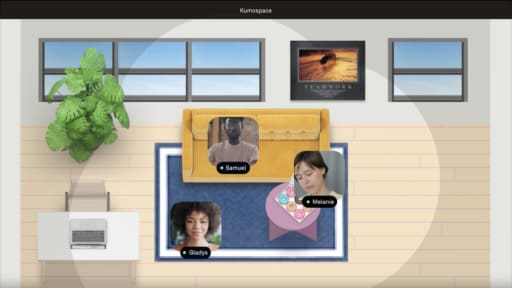
Kumospace is a virtual office platform for remote and hybrid teams. You can run the white elephant game on the video tool you already use and move into a Kumospace office afterward to hang out, or host the whole event there.
With spatial audio, small groups can drift into their own conversations the way people do at an office party. The gift reveals stay center stage, and teammates still get to catch up on the side. Distributed and hybrid teams get time to socialize after the gifts are handed out instead of dropping off the call.
Summary
Collect delivery addresses privately and share each one only with the person shipping that gift. Keep an organizer-only checklist to confirm every gift arrives. Ask for short feedback, such as a one-question poll about steal limits or budget, to adjust for the next virtual white elephant party. You can reuse your invite text, house rules, and gift tracker next year so your white elephant game becomes an annual event your team expects.
Most of a virtual white elephant gets decided before the call. Settle a budget of around $15 to $25 per gift, a delivery model with a domestic mailing deadline 7 to 10 days out, a steal limit of two or three per gift, and a proxy for anyone who can’t join live. With those in place, the online white elephant game on the call is mostly turns and reactions.
Frequently Asked Questions
To play white elephant virtually, give each gift a number, randomize the player order, and share an ownership tracker during a video call. The first player selects an unopened gift for its holder or the host to reveal. Later players either select an unopened gift or steal an eligible revealed gift. Anyone whose gift is stolen chooses again without immediately taking back the gift they just lost. Apply your announced steal limit, resolve each turn, and arrange delivery once ownership is final.
There is no universal rule, so you pick a cap before play. Freezing a gift after its second or third steal is the most common approach. Announce your chosen steal limit clearly before the white elephant game starts so no one is surprised.
You can have people ship their white elephant gift to the final recipient after the game, or mail wrapped gifts in advance to a coordinator. Anyone holding a gift beforehand may need to forward it if someone else ends up with it. Either way, you need clear deadlines and instructions not to open packages early.
A range of $15 to $25 USD per gift, or the local equivalent, is a reasonable starting point for a virtual white elephant. Pick a cap your participants can comfortably afford and your organization’s gift policy permits, and clarify who covers shipping.
A virtual white elephant game works well with digital gifts such as e-gift cards, online classes, or downloadable games, as long as every player can redeem them. Reveal only a description or image on screen, then send the code or claim link privately to the final recipient after the exchange.